Provincial Rules Shaping Secure Payment Pathways for Mobile Jackpot Slots and Video Poker Access
Written by Drew Weber · Aug 26, 2026

Provincial Rules Shaping Secure Payment Pathways for Mobile Jackpot Slots and Video Poker Access
Provincial authorities across Canada establish detailed frameworks that govern secure payment pathways for mobile jackpot slots and video poker, with these rules requiring operators to implement encryption standards, verification protocols, and transaction monitoring systems that protect user funds while enabling seamless access. Data from regulatory filings shows that provinces such as Ontario, British Columbia, and Quebec have updated their technical requirements in recent years, and these changes directly influence how platforms handle deposits, withdrawals, and jackpot payouts for mobile users.
Core Regulatory Requirements Across Provinces
Each province maintains its own licensing body that sets mandatory security benchmarks, yet observers note common elements including multi-factor authentication for account access and segregated player fund accounts that prevent commingling with operational capital. In Ontario the Alcohol and Gaming Commission oversees these standards, while British Columbia relies on the Gaming Policy and Enforcement Branch to enforce similar measures; researchers tracking compliance reports indicate that both jurisdictions mandate PCI-DSS certification plus additional provincial audits conducted quarterly.
Payment pathway rules extend to specific transaction limits and processing timelines, with data showing that withdrawals above certain thresholds trigger enhanced due diligence reviews that can extend settlement periods from hours to several business days. Operators must also integrate real-time fraud detection tools, and studies from industry monitoring groups reveal that these systems flag unusual patterns such as rapid successive deposits followed by immediate withdrawal requests, a common indicator of potential account compromise in mobile jackpot slots environments.
Mobile-Specific Security Protocols for Jackpot Slots and Video Poker
Mobile platforms face additional layers of scrutiny because devices operate across variable networks, prompting provinces to require geofencing technology that restricts access to authorized jurisdictions and session encryption that protects gameplay data alongside financial transactions. Video poker and jackpot slots titles often involve progressive prize pools that accumulate across thousands of players, so provincial rules demand automated reconciliation systems capable of verifying prize integrity before any payout is released to a mobile wallet or bank account.
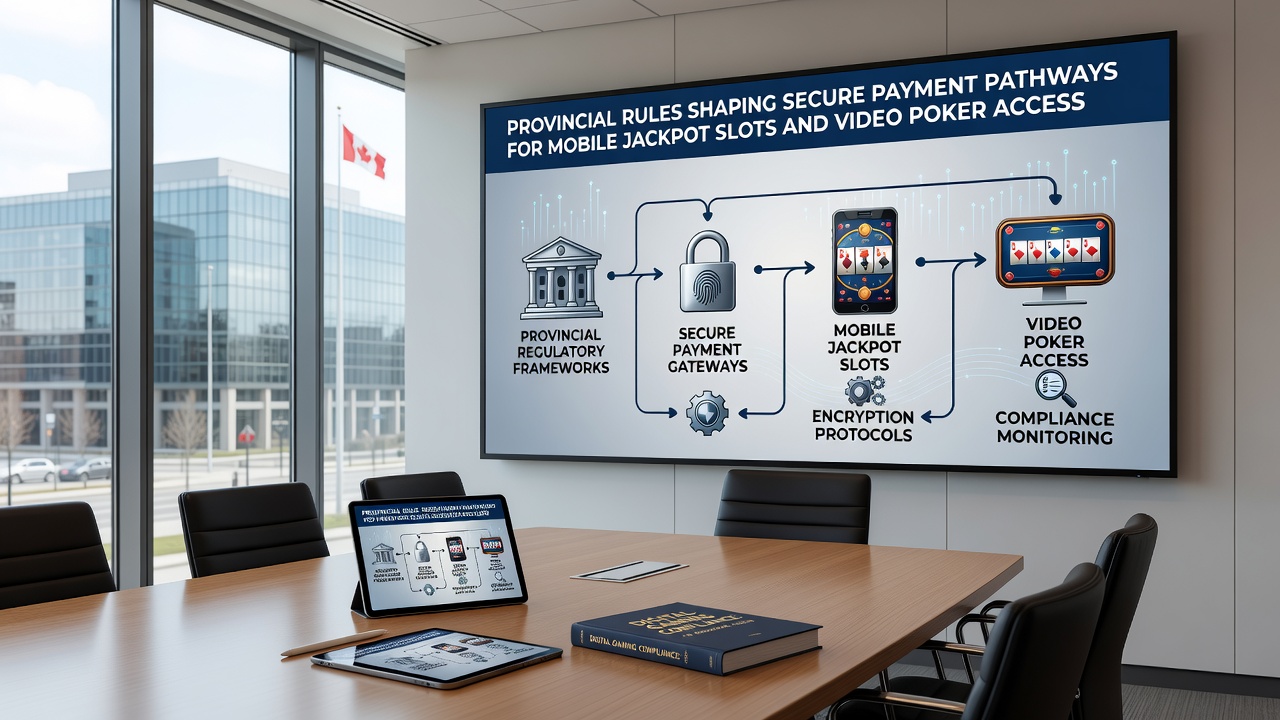
August 2026 marks the scheduled rollout of enhanced tokenization standards in several provinces, where card details are replaced with unique digital tokens that reduce exposure during mobile payments. Figures released by provincial regulators ahead of this deadline indicate that platforms already adopting tokenization have recorded measurable declines in chargeback rates, particularly for high-volume jackpot slots sessions that attract larger average bet sizes than traditional video poker formats.
Provincial Variations in Implementation and Oversight
While Ontario emphasizes third-party testing laboratories for payment gateway certification, Quebec incorporates direct oversight through its own lottery corporation that manages both land-based and mobile channels under unified security protocols. British Columbia has introduced pilot programs allowing approved financial institutions to serve as intermediaries for player deposits, a model that shifts some verification responsibilities away from gaming operators and onto banks already subject to federal anti-money laundering rules. Those who have examined cross-provincial comparisons find that these differing approaches still converge on core outcomes: verifiable transaction trails, rapid response to suspected fraud, and clear audit trails that regulators can access on demand.
Industry associations such as the Canadian Gaming Association publish aggregated compliance data that highlights how smaller operators sometimes struggle with the technical overhead of meeting multiple provincial standards simultaneously when expanding mobile offerings. Yet the regulatory push continues because evidence from enforcement actions demonstrates that weak payment controls have historically enabled unauthorized access in other jurisdictions, prompting Canadian provinces to maintain strict separation between gaming wallets and external payment processors.
Conclusion
Provincial rules continue to evolve around secure payment pathways for mobile jackpot slots and video poker, driven by technological advances and periodic reviews of emerging risk factors. Operators must track updates across jurisdictions because non-compliance can result in license suspension or financial penalties that directly affect platform availability. Data collected through 2026 shows sustained investment in security infrastructure, and those monitoring the sector expect further refinements as mobile usage patterns shift and new payment technologies enter the market.