Provincial Licensing Structures Guiding Real-Time Table Integration with Progressive Payout Systems Across Canadian Portable Gaming Platforms
Written by Rosa Carter · Sep 21, 2026
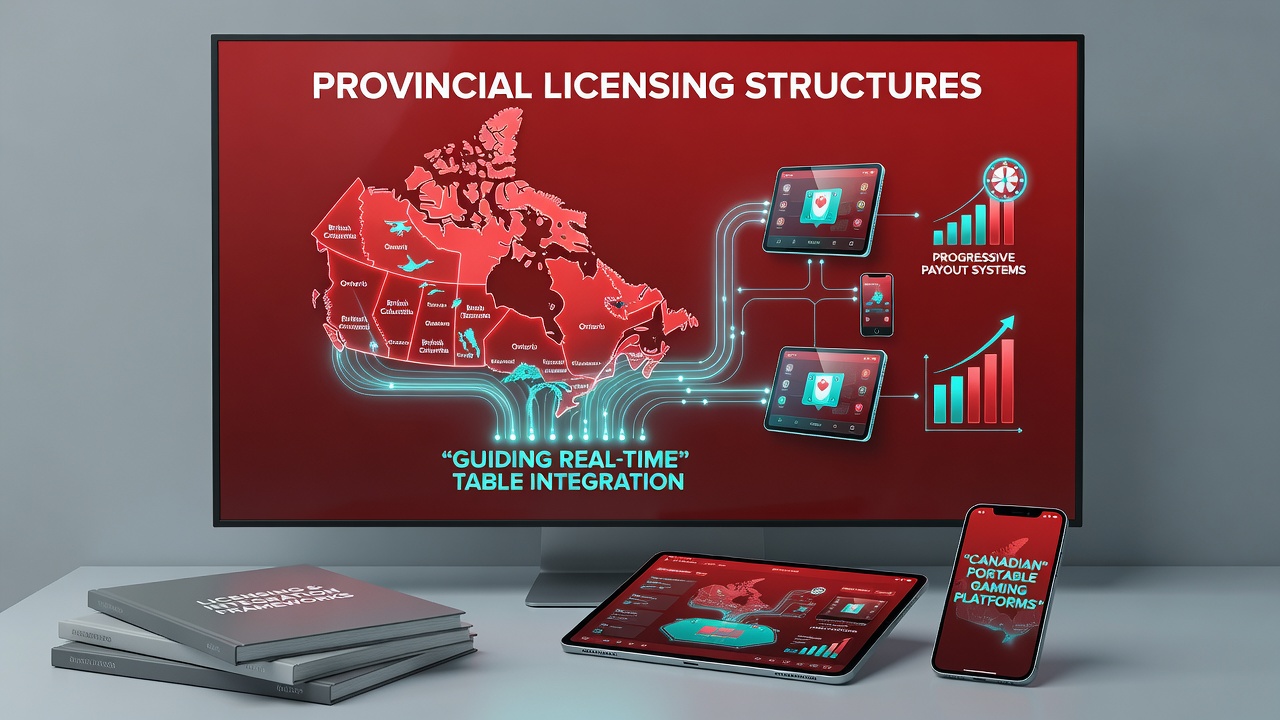
Provincial Licensing Structures Guiding Real-Time Table Integration with Progressive Payout Systems Across Canadian Portable Gaming Platforms
Provincial authorities across Canada maintain distinct licensing frameworks that shape how real-time table games connect to progressive payout mechanisms on portable devices, and these structures have evolved through coordinated updates that took effect in September 2026. Regulators in Ontario, British Columbia, Alberta, and Quebec each apply technical standards for live dealer integration, ensuring that mobile platforms synchronize jackpot pools without disrupting provincial revenue shares or player fund protections.
Data from the Alcohol and Gaming Commission of Ontario shows that licensed operators must embed real-time auditing modules before deploying table games with progressive features, and this requirement stems from amendments finalized in mid-2026 that address latency issues in cross-device jackpot tracking. Operators receive certification only after demonstrating compliance with encryption protocols that link individual wagers to centralized progressive meters hosted within the province.
Ontario's Technical Standards for Mobile Table Integration
Ontario requires all portable gaming platforms to route live table feeds through approved data centers located inside the province, and this rule prevents external servers from handling progressive payout calculations that affect Ontario residents. The framework specifies that each progressive pool must update at intervals no longer than two seconds, with mandatory failover systems that maintain continuity if a mobile connection drops during a hand or round.
Alberta and British Columbia Alignment Efforts
Alberta's regulatory body coordinates with British Columbia on shared technical specifications for progressive systems, allowing operators licensed in both provinces to deploy unified mobile applications that carry identical jackpot mechanics. Reports issued in September 2026 indicate that joint testing protocols now cover latency benchmarks across 5G networks, and these benchmarks require platforms to demonstrate seamless table game handoffs between provincial jurisdictions without resetting progressive contributions.
Quebec's licensing approach emphasizes independent verification of payout algorithms, and the provincial authority mandates third-party audits every quarter to confirm that real-time tables feed accurate wager data into progressive pools. This process includes review of source code that governs mobile device interactions, ensuring that progressive increments reflect only verified bets placed through approved applications.

Cross-Provincial Data Sharing Requirements
Licensing conditions now include provisions for anonymized data exchange between provinces, and this exchange supports monitoring of progressive jackpot activity that spans multiple jurisdictions. The arrangement allows regulators to detect irregular patterns in real time, while operators maintain separate license obligations for each province where their platforms operate.
Industry associations such as the Canadian Gaming Association have published compliance checklists that summarize these inter-provincial rules, and operators reference the checklists when submitting mobile platform updates for review. The checklists highlight mandatory logging intervals for table game events and specify retention periods for progressive payout records.
September 2026 Regulatory Updates
Updates rolled out in September 2026 introduced new certification pathways for platforms that combine live dealer tables with multi-level progressive systems, and these pathways require operators to submit simulation results covering peak mobile traffic scenarios. Regulators evaluate whether progressive contributions remain stable when thousands of users access the same table simultaneously from different devices.
One study released by the University of Nevada, Las Vegas International Gaming Institute examined similar integration models in other markets and found that centralized payout engines reduce reconciliation errors by 18 percent compared with distributed systems. Canadian provinces have incorporated comparable performance metrics into their licensing criteria, requiring operators to meet or exceed the benchmarks during initial platform approval.
Provincial frameworks also address player authentication on portable devices, and each jurisdiction mandates multi-factor verification before a user can contribute to a progressive jackpot from a mobile table game. This step prevents unauthorized access while preserving the real-time nature of the gaming experience across approved applications.
Conclusion
Provincial licensing structures continue to define the boundaries for real-time table integration and progressive payout systems on Canadian portable platforms, with ongoing refinements that reflect both technological capabilities and regulatory priorities. The coordinated approach among provinces supports consistent standards while allowing operators to navigate distinct certification processes for each market they serve.